Showing posts with label Beginner. Show all posts

30.12.13

Buying a Home in Estonia - Price to Rent Ratio

If you want to buy a home in Estonia, after reading the quick Estonian economy review and about Price to Income Ratio you can evaluate if the real state market is over or under valuated using the Price to Rent ratio.

Price to Rent Ratio

When evaluating if a home is affordable, one measurement frequently used is the Price to Rent ratio, defined by average house price divided by the average yearly rent price. Historically in America, this ratio fluctuates between 15 and 25, where a value below 15 means it's cheaper to buy than rent, and higher values can indicate an overpriced house (or a bubble). The European Union Housing Price Index shows an all time low in Housing Price to Rent ratio, and the Global Property Guide European Price to Rent ratio shows how each country compares.

Estonian Price to Rent ratio

Let's see how Estonian Real State market fare's using this simple index.

Tallinn Price to Rent ratio

Since Tallinn is a special case in Estonia, let's take a look at it separately.

Big Picture

Even though the values above don't seem so good, Estonia has almost the lowest of European Price to Rent ratio. However, this lists compare upscale  houses with "Average per square meter prices in US$/€ of 120-sq. m. apartments located in the center of the most important city of each country".

Using Numbeo World Price to Rate map we can see that Estonia has a high but not so high ratio, compared to other world capitals, but I'm not sure how this values are calculated, so take it with a grain of salt.

What do you think, would you still buy a home in Estonia? Share it in the comments.

28.7.13

Estonian Economy - from Independence to Euro

If you are interested in Estonia for work, investment, or just as a tourist, it may help to read a quick summary of recent events in Estonian economy, so you don't get surprised by local prices when arriving in Tallinn.

Estonia adopted the Estonian kroon  in June 1992, replacing the Soviet ruble as national currency after it's re-independence on August 1991. During the transition to a free-market economy, inflation was high as the country economy had fast growing GDP rates (Eurostat dashboard).

Confidence in Estonian economy increased when Estonia joined the European Union and NATO in 2004, and entered the Schengen area in 2007, leading to a housing bubble that burst in 2007, aggravated by the 2008 global financial crisis.

High unemployment rates and a huge drop in GDP followed in 2007 and 2008, but with strict government austerity measures and a pledge to join the Eurozone (finally achieved in 2011), the country economy started rebounding in 2009 and is growing ever since (Real GDP per capita - Eurostat), although still with inflation among the highest in European Union.

To fight economical recession, the European Central Bank decided in July 2012 to cut the main interest rates from 1%  to 0.75% and in May 2013 to 0.5% per year (ECB interest rates), creating a huge incentive for private lending (specially for mortgages) in Estonia.

How these recent economical factors will affect Estonia is not yet known, but some visible trends are the growth of Estonian average wage and GDP per capita in contrast with population decline aggravated by Estonian emigration to other European countries (based on 2011 Census) and the concentration of almost one third of the population and more than half of GDP in the capital area (Harju county).

What do you think the future holds for Estonian economy? Did this post miss any important point? Let me know in the comments.

27.3.13

Working in Estonia - How to start?

If you are a foreigner looking to start working in Estonia, there are several entry level jobs in Tallinn that don't require Estonian language. One good place to start is CV.ee English Job Offers but here are some ideas to help you get started in Estonia:

Big Companies

Some Estonian multinational IT companies have a record of hiring foreigners, looking for diversity and creativity in the workplace, but they may require more experience and/or university degree in the area. Here are some different job offers (March 2013):

Costumer Support Agent 

Estonia is big on the Costumer Service industry, partly because of the good geographical location (and timezone) to the Scandinavian countries, also because of the high education level and language knowledge. This area is always looking for people based on their language skills, so as a foreigner you may have an advantage. Here's some active job offers in Costumer Support field (March 2013):

Local Startups

Estonia is striving to become the European Silicon Valley, and local startups are usually looking for bright minds from all over the world to bring their products to life, but they usually don't announce job openings in traditional ways, preferring twitter or their own site. If you don't mind a smaller team and unconventional work, here are some offers (March 2013):
Here you go, several ways to get started in Estonia, and if you want to read more, here's a detailed guide about how to move to Estonia, including more info on jobs. Have any questions, shoot in the comments!

24.9.10

Estonian Language Online

Do you want to learn Estonian language online? Here are a few interesting resources available, and good links to find more information about Estonian language and culture:

BBC Essential Phrases - Estonian 12 phrases in Estonian with audio available for download (mp3), useful for your first day in Estonia, or to practice pronunciation.


The Estonian Institute has created a book with general information about Estonian language, it's ideal to get a background before starting to study. Estonian Language (pdf)

11.4.09

Spring Days in Tartu


Kevad on käes! - Spring is at hand, so all Estonians celebrate the warm weather.
In Tartu, the city stops during a week with the traditional Student Spring Days.

During the weekend, there are many concerts, competitions, and events for young people to celebrate! Take a look at some of the events in the 2009 Program:

Wednesday - Wet T-shirt Competition
Thursday - Downhill Box car racing
Sunday - Red Bull Flying Machines

Or you can see the pictures from the events of previous years, like:

Wet T-shirt competition

Female Mud Fight

Beer cage climbing

Bambus - Downhill kart racing

Red Bull Flying Machines

Sounds Interesting? All this together with a great mood, beer and food waits you in the city of good thoughts

21.2.09

Tourism in Estonia - How to Shop Tax Free


If you are traveler residing in a non-EU country, you can get back the VAT (18% in Estonia) payed when you bring your purchased items back home. When buying something big, like electronics, this can be a big discount!

First, if you want the money back, make sure you buy your item in a store with the "TAX FREE" sign, and ask for the shop to fill a Refund Cheque! (You might need to show your passport for filling the form)

Second, when leaving Estonia, or leaving EU, show your purchases, receipt and passport to a Customs Office and get your refund Cheque stamped. (Can be done before or after check-in in airports).

Last, show your Stamped Refund Cheque and passport to a Refund Office before leaving EU (usually every international airport has one) and ask for the credit in your credit card or the refund in cash! (If you want cash, you can get the amount converted to the local currency, or in Euros).

Easy! But there's some tricks. You have 3 months after the purchase to ask for the refund, and there's a minimum purchase value for asking the tax refund. For Estonia, this value is 2000 eek (around 180 U$D).

Have you ever got your tax money back? Was it easy? Add your info in the comments!

25.1.09

Winter in Estonia - Ice Skating


One of the pleasures of winter is to engage in Winter Sports. In Estonia, you have many places where you can try Ice Skating all year around, but only during winter you can try ice skating in open air, like in frozen lakes in town, or if you are more adventurous, in the frozen baltic sea. (Yeah, it freezes, and usually each winter there are official driving roads from the mainland to the islands).

Jeti Ice Hall, near the Ülemiste Center, has many indoors ice rinks available for Ice Skating, Figure Skating, Curling and Ice Hokey.

The Linnahall Ice Hall is a ice skating rink closer to the city center, but open only on Fridays and weekends.

The Old Town Outdoor Skating Rink is open only during winters, but there you can skate every day of the week from 10:00 to 22:00. You can even check out how many people is skating with the Skate Rink WebCam.

In Tartu, there's Liuväli, a full size skating arena in LõunaKeskus, with the best ice rink, but you have the check the schedule, not all the hours are available for ice skating, as they have Hokey trainings and Figure Skating.

But if you are looking for more, why not Ice Skate on the Frozen Baltic Sea? 360.ee offers Ice Skating in Big Open spaces, like many of the Estonian big lakes or in Baltic Sea, between Haapsalu and Vormsi. Be prepared to skate for more than 4h, more than 20km, in a wild and beautiful scenario, surrounded by ice and Estonian Nature. See what kind of adventures you can do in some of their online pictures (Estonian language required)...

... Or you can check my pictures when I was skating in the Baltic Sea!


Do you have any comments on Ice Skating in Estonia? Leave your opinion below on the comments!

1.1.09

Head Uut Aastat!

That's Estonian for Happy New Year!
Or if you want in Russian, С Новым Годом!

And if you want to see how is a winter day in Estonia,
this was the Last Day of 2008 in Tallinn!


31.08.2008: Temperature average -1°c, day of 6h and 12min (sunrise at 9:18, sunset at 15:30).

More info in TimeAndDate.com and weather.com websites.

19.11.08

Estonia and Brazil - Tallinn Winter Tropics Festival 2008


Tere!

Since 1992, the international community in Estonia has grown a lot! Also the relations between Estonia and Brazil flourished, with many Estonian traveling to Brazil, and Brazilians coming to Estonia.

Many Estonians are learning Portuguese (with Gustavo), practising capoeira (with Lauro), listening to Brazilian music (with Denise and Jay in Clazz every Tuesday 21), and even eating in a Rodizio (All-you-can-eat meat) Restaurant (Ipanema Rodizio), among many other things.

This weekend, the First Brazilian Music Festival is happening in Tallinn. Brazilian vibes, with international attractions.


Tallinn Winter Tropics Festival!
(Tickets sale online)

Check out more about the biggest attraction, Elza Soares, anthological samba and bossa singer, awarded "Best Singer of the Millennium" by the BBC.

See you all there!

15.8.08

City Transportation - Tallinn

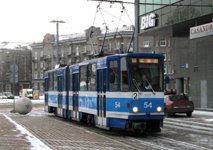
BUS Tallinn, Estonia capital, has a good and integrated public transportation system, composed of city Bus, Tram (electrical train on tracks) and Trolley (electrical bus).

A travel ticket can be used in any of those systems, costing 13 eek (beforehand from kiosks or shops) or 20 EEK (from the driver). You can also by a 10 ticket package for 90 EEK. Students with valid identification pay less (6 eek beforehand, 12 eek from driver).

Trolley If you will use the public transportation a lot, you can have better prices if you buy a daily pass, 10, 30, or 90 days pass. This can be bought in paper at the kiosks, or if you have an Estonian-ID, online from pilet.ee.

Please, buy tickets before using public transportation. Every now and then, some private security personal enter checking if you have a valid ticket. If you use your ID-card, just handle them, they check in a small machine in front of you. Support Estonian economy, and don't get Tased, bro!

TRAM You can get the timetables, stops, and travel directions in the Sõiduplan site of Tallinn City Portal. More info in the Tallinn Tourism site (also a great page, full of useful info in English).

Now, for informative fun, you can check a little of the History of Public Transportation in Tallinn at Tallinna Ühistransport. Did you know that Trams in Tallinn are celebrating 120 years of operation in 2008?

1.8.08

Learning Estonian - Language Schools

If you are beginning to learn Estonian, a good language teacher can do wonders! Many foreigners I've met learned a basic Estonian (that they could speak and understand with people in the streets) before the end of one study semester (not my case, though).

Of course you can learn in the Estonian Universities (like Tartu University and Tallinn University), but they are usually more expensive and don't offer many time options. A good hint is to go for an Estonian Language School. There you will meet others foreigners interested in Estonia from many different parts of the world (and it's helpful when your colleagues know English and other languages, like Russian or German). Usually, you pay a semester fee (around 2500 eek) for 2 classes per week, with 2 academic hours (45 min) per class, and get the materials for your level.

Language Centers in Tallinn


TEA
TEA Language Center has been teaching foreign languages, such as English, German, Finnish, and Estonian, since it was established in 1988. In 1991, due to a lack of high quality foreign language textbooks, TEA Publishers was established. The languages currently taught at TEA Language School are: English, Estonian, Russian, French, Spanish, Italian, Finnish, Swedish, German, Japanese, Chinese, Arabic.

ILS
The ILS group of schools was established in 1998 in Tallinn, with our sister schools in Riga and Vilnius, we are able to offer a truly Pan-Baltic Service. Whoever you are and whatever you do International Language Services will try to provide the language course for you. At ILS we aim to provide top quality language training at prices which are affordable.


Language Centers in Tartu


Tartu RahvaÜlikool
Tartu Folk High School Training Centre offers training courses for adults. Our school is open to all who wish to develop their talents, refresh their knowledge, or learn something new in order to cope with life. Language Courses: English, Estonian as foreign language, French, Finnish, Swedish, Spanish, Italian, Russian, Dutch.

Dialoog
Dialoog offer possibilities to study Estonian, Russian, English, and the Finnish languages in Estonia. As you can see, we are offering the same services as others, but if you value professionalism, flexibility, and accuracy, you are in the right place. In addition, we already have 14-years experience in offering these services.


In Estonia, the academic year starts on September till December (Autumn semester), then a short winter break, returning in February till June (Spring Semester). It's always better to start from September, so schedule yourself!

Do you have any feedback about these Language Schools? Want to recommend another? Post it in the Comments!

25.7.08

Estonian Language - Books

If you are decided to learn Estonian Language, a good book will help you out.
Unfortunately is not so easy to find books about Estonian language in English.

In Estonian


E Nagu Eesti
The first Estonian language textbook and most used by foreigners to learn Estonian. All his 30 chapters doesn't have one single word in English, but includes a useful Estonian dictionary (Estonian to German/Russian/Finnish/English). NB! It requires a teacher (or a Estonian friend) to understand its lessons. Can be found for 12 euros in TEA (Estonian Publisher / Language company).

Naljaga pooleks
This book is used by Tartu University foreigners that want to learn Estonian for entering Estonian courses in University (in other words, its the best available). Includes a CD (50 minutes) with sound exercises, and can be found for 20 euros in Apollo (one of the biggest book shops in Estonia).


In English


Colloquial Estonian
First book made for English speakers, with many explanations about Estonian grammar. It starts easy, with English translations till chapter 5. Then Estonian is more used. The book has an audio CD (sold separately), and can be found in Amazon.com for around 35 USD. This book is commonly found at public libraries in Estonia, so you can try it before you buy it.

Teach Yourself Estonian
From the same authors of 'Naljaga pooleks', a self study textbook for English speakers (not available yet), pre-release listed in Amazon.com for 35 USD (I believe that it will be better than the above one).


As far as I know, there's many books for Germans and Russians to learn Estonians
(basically because of historical reasons). There are many dictionaries available also between those languages.

If you happen to know the name of a good book for learning Estonian (in English, German, Russian or any language) feel free to add it in the comments.

17.7.08

Estonian Language - Tere Tulemast!


Estonian language belongs to the Finnic branch of Finno-Ugric group of languages (check out the family tree picture).

Of the ancient European languages, Basque in the Pyrenees, the Finno-Ugric languages in the North, and Caucasian languages (e.g. Georgian) in the southeastern corner of Europe have managed to survive. As you can see, it's not related to the neighbouring Indo-European languages such as Russian, Latvian and Swedish.

Estonian language uses the Latin alphabet (including the letters Õ Ä Ö Ü), is often pronounced like is read, with word stress fixed on the first syllable. This makes it very easy to start learning, reading and speaking!

The Estonian Institute has many interesting publications (available online) about Estonian culture, including this booklet about Estonian Language. It shows many different aspects of the language, and it's easy to read.

When in Estonia, speak like Estonians! You can practice some basics online with BBC languages. Or you can hear a little from my Estonian friend:


Tere, mina olen Anna-lisa, olen pärit Eestis, ja õpin Tartus.
Hi, my name is Anna-lisa, I'm from Estonia, and study in Tartu.

Easy? Difficult? Tell me what you think about Estonian Language in the comments!

13.7.08

City Busses in Tartu - Estonia


If you live in Tartu, or is going to stay for a while, then you will be happy to know that this city has a good network of buses and microbuses. Check the bus lines map (bussiliinid) to see where is the closer bus stop, and then check the Bus Timetables at the BussiInfo site.

So, how can I use the buses? If you pick the yellow microbus (Automen Ekspressbussid), then you pay 15 eek to the driver when you enter and that's all. But if you are taking the city GO buses, it gets a little bit more interesting! Randomly red cars from private security enters the bus checking if you have a valid ticket. If you don't, you will be eligible for a 600 eek fine!

So see below how you can buy your ticket and don't travel like a rabbit (Jänes, like the estonians say for the one who travels without paying).

You can buy your tickets in the bus with the bus driver (16 eek in cash for 1h trip), or by little one-trip punchable bus tickets (13 eek, 8 for students) in advance at the R-kiosks (just remember to punch them when you enter the bus. You can also buy a 10 bus tickets pack, with great discount (100 eek, 10 eek each, way cheaper)!

If you need to use more than one bus trip, then you can get the paper one-day ticket, 30-days ticket, or even a 90-days ticket. You don't need to punch them, they are dated in the R-kiosk when you buy it. More info about the prices (in estonian) at the nice City of Tartu website .

But of course, in Estonia, an electronic solution is also available: Id Pilet . With your Estonian ID, you can buy your hour ticket, day ticket, 30 days ticket or 90 days ticket from Internet or mobile phone, and its cheaper than the paper version! I've been told that some people try to buy them when they see the ticket fiscals car in the bus stop, but I haven't seen that yet :)

Just be careful because every season the bus time tables changes, and sometimes some roads are in repair, making some bus lines changes as well.

Well, for a city where you can get from the city center to the city limits in half an hour walking, maybe its better to walk. What do you say?

30.6.08

Estonia National Holidays


When coming to Estonia, is good to know about Estonian Holidays - or in estonian Puhkepäevad.
From the astonishing number of 12 free-days, is interesting to note that more than half of them are religious (as Estonians often define themselves as non-religious). Check the dates for the Estonian Holidays in 2008 below:

· 1 January - New Year's Day (Uusaasta)
Nothing unusual here (except perhaps for the Estonian president pronunciation in TV on the 5 minutes before midnight in new year's eve).

· 24 February - Independence Day (Iseseisvuspäev)

Day of declaration of independence by Republic of Estonia from Russian Empire (1918).

· 21 March - Good Friday (Suur Reede)
Movable holiday, always on Friday :)

· 23 March - Easter Sunday (Ülestõusmispühade)
Movable holiday, always on Sunday :)

· 1 May - Spring Day (Kevadpüha)
Come again, Spring day? Wasn't that Worker's Day? Not for Estonians, though...

· 11 May - Pentecost (Nelipühade)
50 days after Easter, also on Sunday :)

· 23 June - Victory Day (Võidupüha)
Coincidently one day before midsummer day :) - Commemorates the victory of Estonian forces over the Baltic Germans' forces in the Battle of Võnnu (Cesis) in northern Latvia in 1919.

· 24 June - St John's Day or Midsummer Day (Jaanipäev)
Midsummer Eve is a traditional celebration held on the night of 23-24 June. This day marks a day closest to the longest day of the year when twilight and dawn appear to merge. The evening of the 23rd and well into the morning of the 24th is celebrated with bonfires and a traditional festive menu.

· 20 August - Day of Restoration of Independence (Taasiseseisvumispäev)
Dramatic developments in the Soviet Union in August 1991 resulted in the three Baltic countries finally regaining their independence. On 20 August 1991, Estonia issued a decision on the re-establishment of independence on the basis of historical continuity of statehood.

· 24 December - Christmas Eve (Jõululaupäev)
The day before Christmas, a full-day holiday...

· 25 December - Christmas Day (Esimene jõulupüha)
The first Christmas day...

· 26 December - Boxing Day (Teine jõulupüha)
And the second Christmas day! 3 Days of Christmas vacations, isn't that great? Combine that with new year's day and a weekend, and you have almost every year one week of free days! Specially useful to cheer up unmotivated souls from the long nights of winter.

What do you think? Too many, too few? Post it in the comments!

26.6.08

Dangerous Estonia - Tick


Long sunny days (with some rain), warm weather, it's summer in Estonia. Perfect time for being outside, enjoying Estonian sun and nature. But nothing is perfect, and you should be aware of one of the biggest danger in Estonia - Ticks.

Puuk (in estonian) are very small and usually live in thick grasses or forests (sometimes dropping from high trees). If you have just came from nature, search your body carefully for this little creatures. They like warm places like body joints. Be careful to remove them without squeezing the body, to avoid unwanted parasites in your body.

Why they are so dangerous? They carry with them some nasty diseases, like encephalitis and borreliosis. But only if they are infected, and usually there is no problem if removed and disinfected within 24h.

So, enjoy the summer, the beautiful and wild Estonian Nature, but play it safe!

12.6.08

Would you like to visit Estonia ? :)

I will not try to explain what is Estonia,
perhaps you should see with your own eyes... ;)


Rafael Karamázov - Brazil

11.6.08

Traveling to Estonia - By Plane

If you want to come to Estonia by plane, Tallinn has an airport (called Tallinna Lennujaam) very close to the city center (4km), with very fast connections by city bus or taxis to the city center! If it's your first time, it might be the best choice. Plus, the airport has free wireless internet! :)

- Estonian Air
The National Airlines flies from Tallinn to many European capitals and cities.
In the website (in Estonian, English and Russian) you can book and pay with local bank cards or international credit cards. Prices are good if you book in advance, and you can have a interesting taste of Estonia, with blond flight attendants, surrounded by Estonian language.

- EasyJet
A British low cost Airline that connects Tallinn with daily flights to London (£19.99) and Berlin (€19.99).
It's cheap, but with some gotchas: Hand luggage price not included (cost by piece); Extra luggage (more than 20kg) is veeery expensive (cost by extra kilo, watch out!); Payment adds extra costs (if you can, pay with visa debit cards, it's cheaper).
The website, and the whole service, is done in almost all European languages, and don't be surprised if you find a flight attendant that speaks your language.

There are more airlines working in Tallinn, like the Finnish Finnair, Latvian Air Baltic, Dutch KLM and German Lufthansa, but it all depends where you are coming from, and what you want. If you are looking for the cheapest way, I recommend getting to Europe first (London, Berlin, or other European capital), and then with one or two flights you are in Tallinn.

10.6.08

Introduction


Tere (Hi)!

This is a tool for anyone that wants to come, lives in, or just want to know more about Estonia.

The starting point is Estonia in Wikipedia, but if you want something less veridical, there's Estonia on Uncyclopedia. For a closer look, check also the official tourism info website.

Here you will find information about Estonian and Estonians, Culture, Language, Geography, Economics, History, and anything that is useful to understand better Estonia, for foreigners like me. That's why English is the main language (but don't be scared if you find some Estonian words).

I'm a Brazilian, living and working in Tartu - Estonia since 2006. I think I have some experience to share about Estonia, and I'm open to discussion. If you have a better idea, or you disagree, comment!